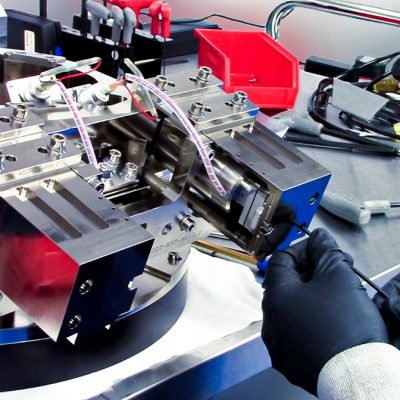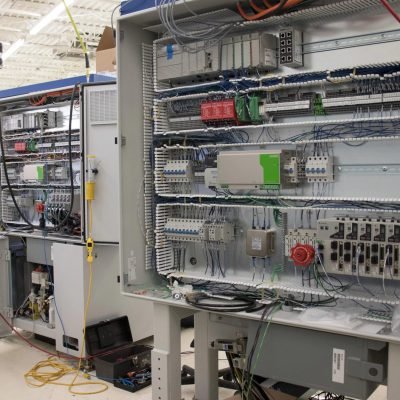


How machine frame design choices affect cost, quality, throughput, and repeatability Machine frames are often the backbone of complex OEM equipment. They support motion systems, process hardware, enclosures, panels, tooling, guards, access points, and critical interfaces that the rest of the machine depends on. That is why DFMA for machine frames needs more than a standard design check. A frame may look straightforward in CAD, but construction method, tolerance strategy, fixture planning, weld requirements, inspection approach, and assembly sequence can all affect cost, quality, throughput, and repeatability. For OEMs developing equipment frames, sheet metal enclosures, welded structures, fabricated bases, and large mechanical assemblies, DFMA connects design intent with production reality. The goal is to support functional requirements while reducing avoidable manufacturing operations, post-processing, inspection burden, and assembly risk. Why Machine Frame DFMA Matters Machine frames carry production risk because they are large, structural, and tied to many other parts of the system. They may…
READ MOREA product can be well-designed and still be frustrating to build. Parts may be difficult to reach, fasteners may be hidden, components may need manual alignment, or the assembly sequence may rely too heavily on operator judgment. That is where Design for Assembly, often shortened to DFA, becomes useful. DFA helps engineering teams think through how a product will be assembled before the design is released for production. The goal is to make the build clearer, more repeatable, and less dependent on workarounds. For OEMs building machinery, equipment, fabricated structures, mechanical assemblies, and electromechanical systems, assembly is rarely a simple final step. It is a major part of the production process. Design for assembly helps teams reduce avoidable build complexity while preserving product function, quality, safety, and serviceability. Design for assembly is an engineering approach focused on making products easier and more consistent to assemble. It looks at how parts…
READ MOREHigh mix low volume manufacturing creates a unique challenge for OEM machinery production: every build may be complex, but few builds are exactly the same. Unlike high-volume production, where stable designs and repeated processes can be refined over long runs, HMLV manufacturing often involves smaller batches, custom configurations, frequent engineering changes, and more variation from one build to the next. For complex machinery, equipment, and integrated systems, that variation can make bill of materials (BOM) control and part flow difficult to manage. A missing component, outdated revision, incorrect quantity, or delayed purchased item can stop a build, create rework, or push delivery dates. That is why BOM accuracy, revision control, material readiness, kitting, and traceability are critical in high-mix, low-volume machinery production. Why HMLV Machinery Production Is Hard to Control High mix low volume manufacturing combines two sources of complexity: product variety and limited production volume. OEMs may need to…
READ MORE